


Is there a treatment for chronic kidney disease?
Patients with chronic kidney disease in its most advanced stage, stage 5 (when only a small percentage of the kidney is functioning), need, at some point, to undergo renal replacement therapy in order to live. This can be hemodialysis, peritoneal dialysis, or kidney transplantation. The patient should choose, together with their attending nephrologist, the technique they prefer and that best suits their lifestyle.
Finding out you have kidney disease can be difficult, but learning more about your kidneys is the first step toward taking control of your health. Following a kidney-friendly diet, not smoking, and managing diabetes, high blood pressure, and other health problems can help you maintain better kidney function for longer, even if you have kidney disease.
It is also important to remember that you are not alone. At DaVita, you have an attentive, compassionate, and knowledgeable team to help you understand kidney disease and the right treatment for you.
What is hemodialysis?
Hemodialysis is the most common form of renal replacement therapy. It is a process that removes waste and excess fluid from the blood when the kidneys are unable to do so on their own. This treatment can be performed in a hospital or at dialysis clinics near the patient's home.
During treatment, blood is taken from a blood vessel and passed through a synthetic filter, the dialyzer (or “artificial kidney”), before being returned to the body. This process helps maintain safer levels of certain chemicals, such as potassium, in the bloodstream.
Usually, three hemodialysis sessions per week are required, with each session lasting an average of 4 hours. Hemodialysis is an effective treatment for patients with end-stage renal disease. However, hemodialysis alone does not guarantee complete treatment in cases of kidney failure. You will need to follow a diet tailored to your needs and control your fluid intake. You may need to take certain medications to replace other functions performed by the kidneys, such as controlling blood pressure and stimulating red blood cell production to prevent anemia.
How does hemodialysis work?
In hemodialysis, blood is removed from the body and filtered through a membrane called a dialyzer or artificial kidney. After this “cleaning,” the filtered blood is returned to the patient's body. On average, people have 4 to 5 liters of blood; during dialysis, only half a liter of blood (about two cups) remains outside the body.
In order to perform hemodialysis, an access point must be created that allows blood to flow to the dialyzer and back to your body. There are three types of access points for hemodialysis: arteriovenous (AV) fistula, AV graft, and central venous catheter (CVC).
AV fistula is the vascular access most recommended by dialysis specialists; however, you will need to decide, together with your nephrologist, which access is best suited to your situation.
When a patient begins hemodialysis, their vital signs and weight are checked by a nurse. Weight gain indicates excess fluid that must be removed during treatment.
In patients with vascular access (AV fistula or AV prosthesis), two needles are inserted: one for blood outflow and one for blood return. In patients with a central venous catheter, blood enters and exits through the branches of the CVC.
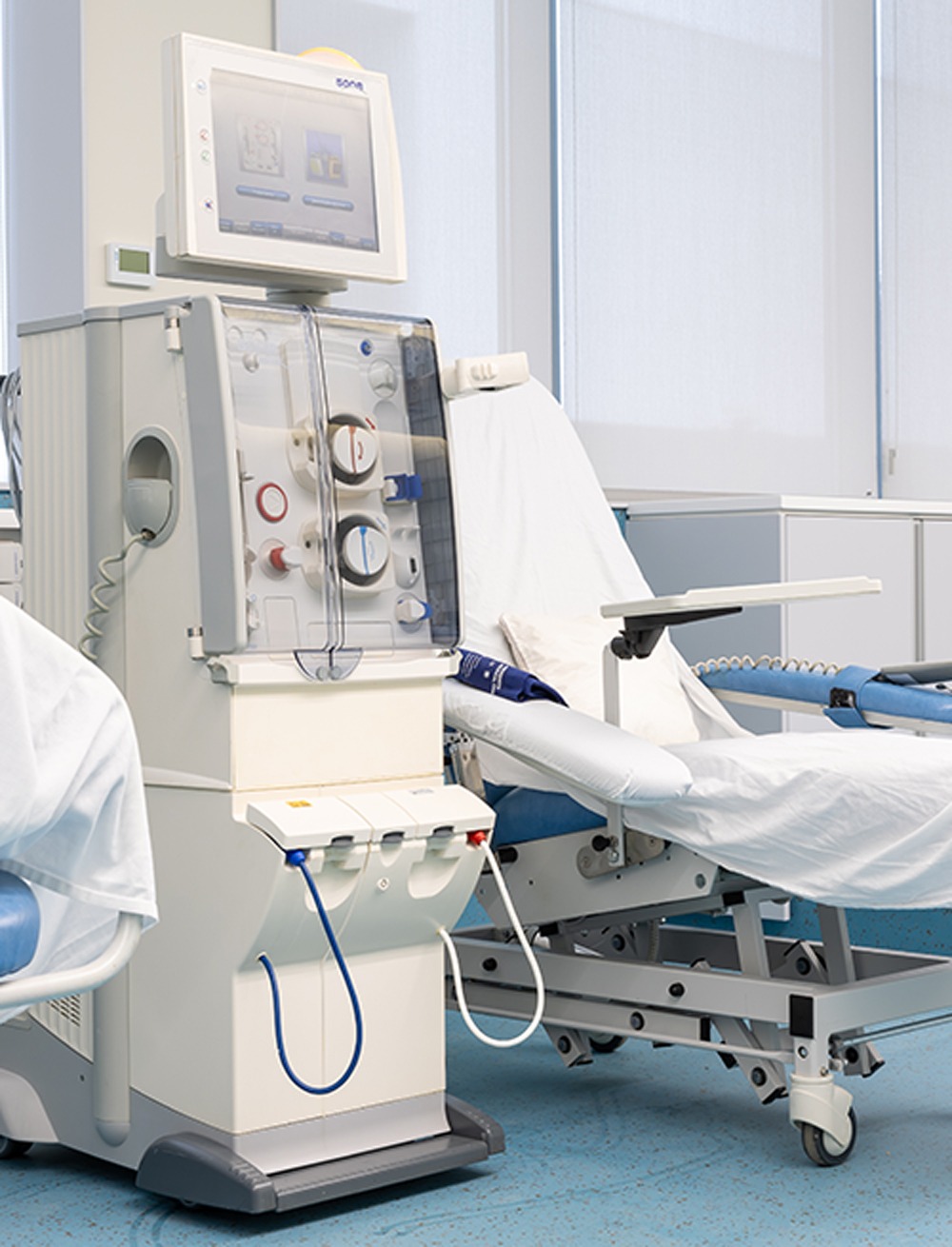
The dialysis machine is programmed and treatment begins. The dialysis machine is like a large computer. It continuously records blood flow, blood pressure, the amount of fluid removed, and other vital information. It mixes the dialysate, i.e., the dialysis solution, which is the dialysis bath that enters the dialyzer. The dialysis machine has a blood pump that keeps the blood flowing, allowing blood to circulate from the patient to the dialyzer and back to the patient. The dialysis machine also has several safety features to ensure safe and efficient treatment.
The dialyzer is key to hemodialysis. The dialyzer is called an artificial kidney because it filters the blood—a function that was previously performed by the kidneys. The dialyzer is a hollow plastic tube containing many tiny filters.
Dialyzers come in different sizes, so the nephrologist prescribes the most suitable dialyzer for each patient. The dialyzer consists of two compartments: the compartment for the dialysate (dialysis solution) and the compartment for the blood. The two compartments are separated by a semipermeable membrane so that they do not mix.
The semipermeable membrane has microscopic holes through which only certain substances can pass. Because it is semipermeable, water and waste products can pass through the membrane, but blood cells cannot. The dialysate, also known as dialysis solution, is a solution of pure water, electrolytes, and salts, such as bicarbonate and sodium.
The purpose of the dialysate is to remove toxins from the blood and pass them into the dialysate. This process is called diffusion. In the blood of hemodialysis patients, there is a high concentration of waste products, while the dialysate has a low concentration of waste products. Due to the difference in concentration between the blood and the dialysate, the waste passes through the semipermeable membrane, creating an equal amount of waste on both sides. The dialysis solution is eliminated along with the waste. The electrolytes present in the dialysis solution are also used to balance the electrolytes in the patients' blood.
There are different types of dialysis solutions, so your doctor will choose the one that is best suited to your treatment. The accumulated fluids are removed through a process called filtration. The fluids are pushed through by higher pressure on the blood side than on the dialysate side.